


‘SACRED’
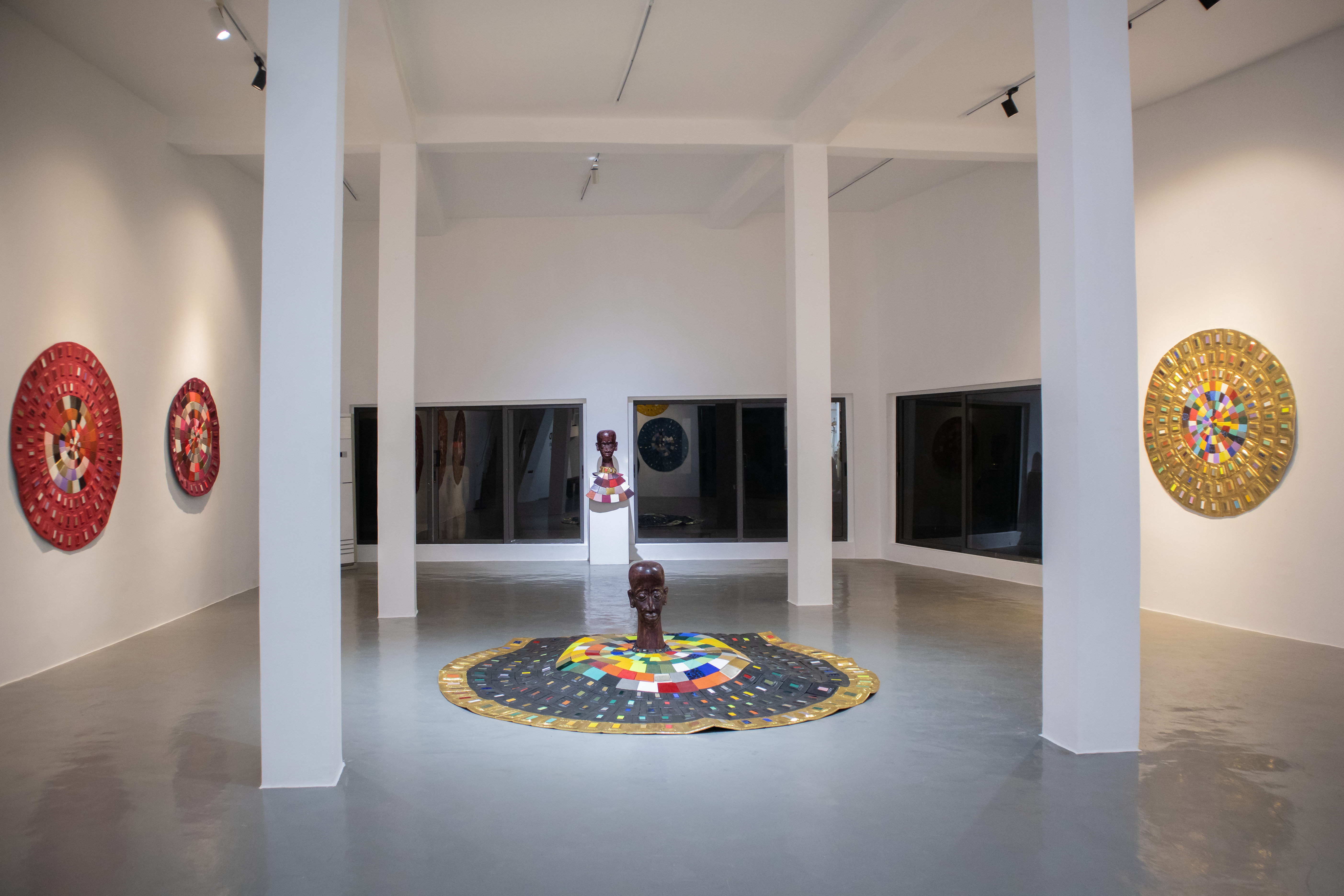
Across cultures, objects have long served as vessels of power, belief, protection, and transformation. Talismans, ritual objects, animal hides, leather, and other materials carry histories of survival, struggle, dominance, and resilience. It is within this material and spiritual terrain that Awuyah situates his practice. His works become both contemplative and critical: an exploration of how power is materialised, how belief gives objects potency, and how objects, in turn, shape our understanding of power and existence. At the crux of this exhibition, Awuyah poses a question of power: how do we encounter it, negotiate it, and invest it with spiritual meaning? His works draw from a constellation of visual and material references, from the batakari kɛseɛ of the Ashanti to the breastplates of Jewish High Priests, as well as the symbolic motifs associated with fetish priests and practitioners across West African spiritual traditions. Across these varied cultural and spiritual spaces, the talisman emerges as a recurring figure: an object through which power is embodied, invoked, negotiated, and protected. In this sense, the sacred is not confined to religious spaces or ceremonial objects. It emerges wherever people locate meaning, preserve their dignity, and find the courage to continue. War regalia occupies a spiritual and sacred position within African societies. Leaves, cowries, feathers, blood, animal hides, teeth, bones, and other objects are chanted and prayed upon to evoke spirits and invite them to dwell within these locally crafted contraptions, which we may call talismans. Traditionally associated with spiritual protection and the pursuit of favourable outcomes, the talisman occupies a space between the physical and the spiritual. The artist, Kofi Awuyah, historically draws attention to the striking similarities between the war regalia of many West African empires and the armour of the Roman and Greek empires. In contrast to African war regalia, Greek armour was primarily made from bronze, while Roman armour incorporated iron and steel plates for the torso, alongside leather for the lower part of the body. Across these two empires, spiritual fortification was not necessarily imbued into armour through incantations or chants; rather, inscriptions, pictorial imagery, and religious iconography were embossed or otherwise incorporated into the armour’s surfaces. The batakari, which Awuyah draws aesthecic and structural reference from is also known as fugu or bingmaa. It originates from the northern parts of Ghana, where traditional cotton weaving developed as both a practical craft and a cultural art form. Historically worn by hunters and warriors, the garment served as protection against the elements and held spiritual significance. In the nineteenth century, through military quests and aliiances between the Ashanti Kingdom and the Dagomba’s, Gonja’s, Asante warriors wore a battle version adorned with leather pouches and metal cases containing talismans, believed to offer spiritual protection and immunity from bullets. Over time, the batakari evolved from a garment associated with warfare and spiritual power into a widely recognised symbol of Ghanaian cultural identity and heritage. What connects Batakari kɛseɛ (Akotadeɛ) of the Ashanti, the breastplate armour of the Greeks and Romans, and the cloaks of Jewish High Priests? Is it their methods of production, their origins of power, or the ways in which material objects are invested with authority and spiritual significance? Within one of the installations stands a carved human head, emerging from concentric circles of black, gold, and multicoloured elements. Awuyah describes the head as evoking the individual as both the bearer of lived experience and the centre of competing forces. The surrounding circular forms suggest layers of protection, systems of belief, and the invisible structures through which people seek security and meaning. The black surfaces evoke the weight of struggle and the obscurity of the unknown, while the gold perimeter suggests value, authority, aspiration, and the desire to rise above one’s circumstances. The vibrant colours at the centre introduce a sense of human complexity, reflecting the many emotions, identities, and experiences that shape our existence.
Among the materials Awuyah employs in his work are animal hide, leather, and suede, all derived from animal sources. The process of obtaining these materials often involves animals being killed or subdued so that their fur, tusks, horns, feathers, or bones can be collected and processed into materials that later appear in Awuyah’s pieces. The quest for survival is inseparable from the pursuit of power and control. In the jungle, the struggle for dominance determines which species maintains its position as king and which is eventually overthrown. A similar dynamic can be observed in human society, where power manifests through wealth, social status, knowledge, political influence, and access to opportunity. For those who lack these conventional forms of power, alternative sources of strength become essential. Awuyah draws on these references not merely for their physical connotations, but also to evoke a recurring cycle premised on the continuity of life. The circular arrangements within his work are not simply aesthetic forms; they originate in this very ideology of repetition, reflecting patterns that recur in both wildlife and human existence. Here, he does not privilege one experience or expression of the urge for power over another. Instead, Awuyah has developed an intricate system of arrangement and assembly in which newly constructed forms stand independently alongside carved wooden heads, creating relationships between material, form, and symbolic meaning. Beyond the materials themselves, which bear a deep relationship to these themes of power, the processes employed in making each work are as poetic and potent as the materials. These processes draw specifically from the practices of shoemaking, upholstery, and the production of other leather goods. Every stitch is deliberate and follows a particular sequence of cutting, gluing, and handstitching. The scissors, blades, needles, rope, glue, and threads become metaphors for tearing and cutting apart, and for the subsequent acts of connecting, binding, building, and coming together. Through these processes, acts of separation are transformed into gestures of assembly, suggesting that power and resilience may also emerge through the labour of repair, reconstruction, and connection. Paying attention to the material properties and processes underpinning Awuyah’s work, one cannot ignore the origins and distinctive varieties of the materials he employs. These include natural leather, synthetic leather, silk fabric, EVA (ethylene-vinyl acetate), and bonded nylon thread. Much of the leather, including synthetic leather, is sourced from Kantamanto. Offcuts and pieces of leather are recovered from large bales containing heavily processed leather, much of it originating in Europe, particularly Italy. Material that might otherwise have ended up in the production of luxury goods, such as Gucci or Chanel bags, is repurposed by Awuyah as an object of reverence, carrying power, cultural value, and heritage. Through this transformation, materials are removed from their conventional associations with luxury and commercial value and repositioned within a framework of spiritual significance and cultural reflection.
Text by Nuna Adisenu-Doe
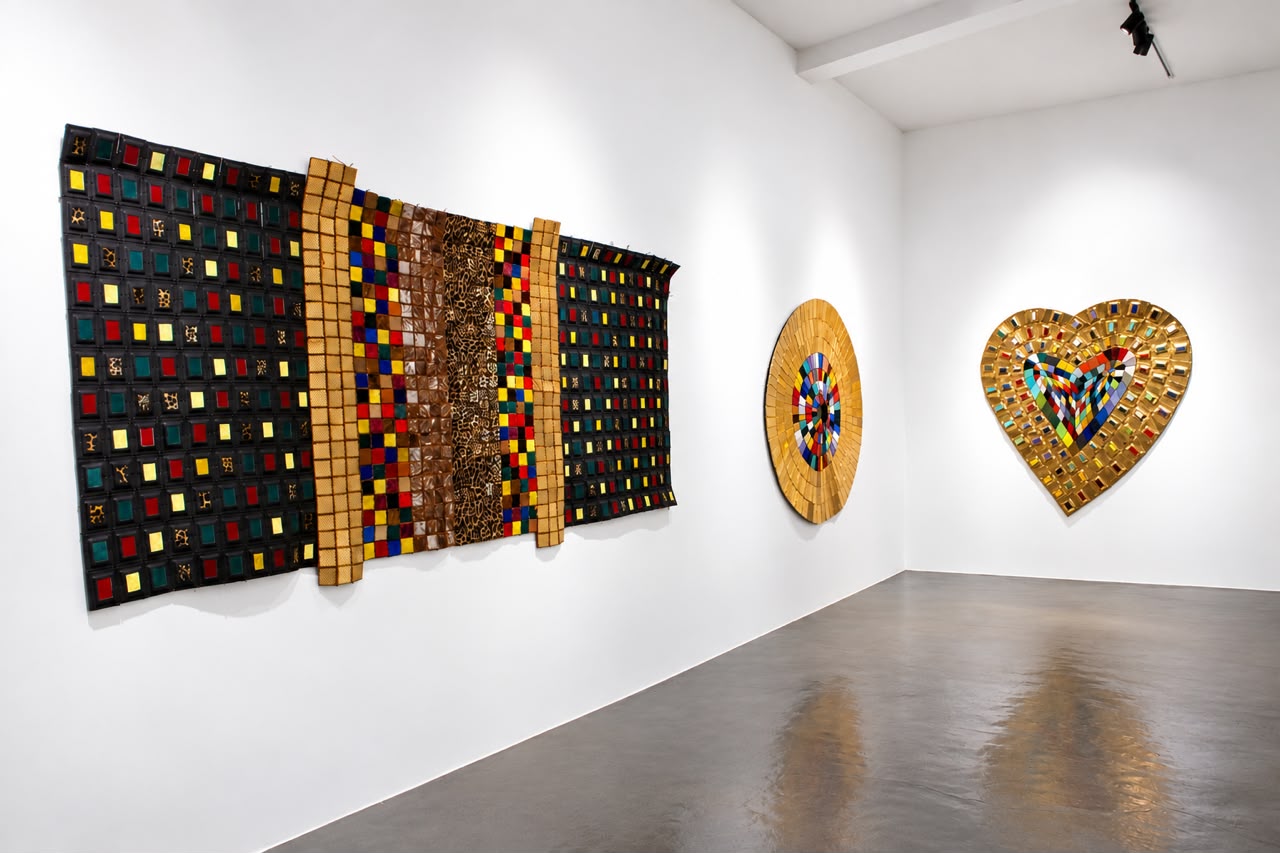
Installation Views


Selected Works
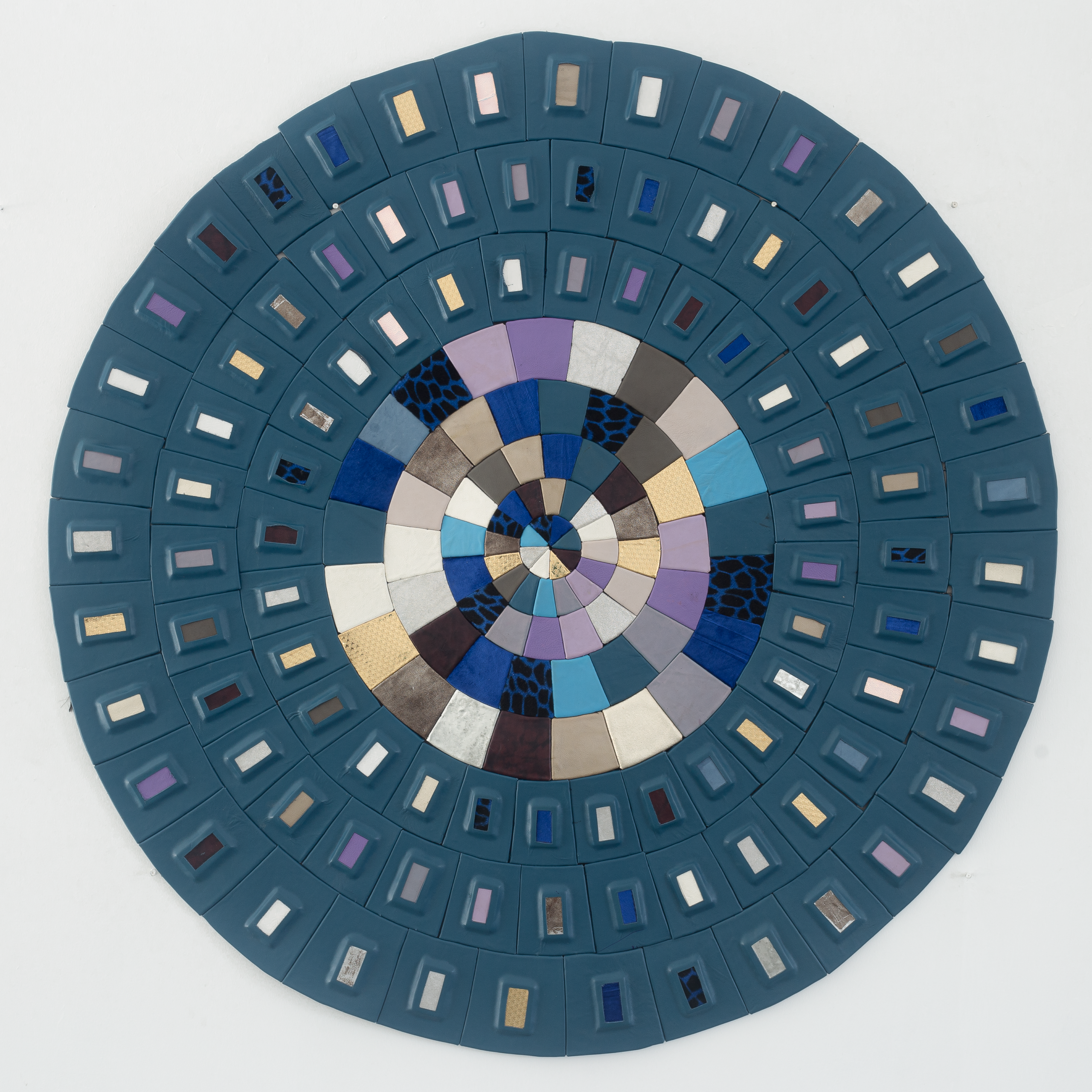
Nutifafa (Peace and Comfort)
Leather, Fabric, Ethylene‑Vinyl Acetate & Bonded Nylon Thread
59 inches round
2026
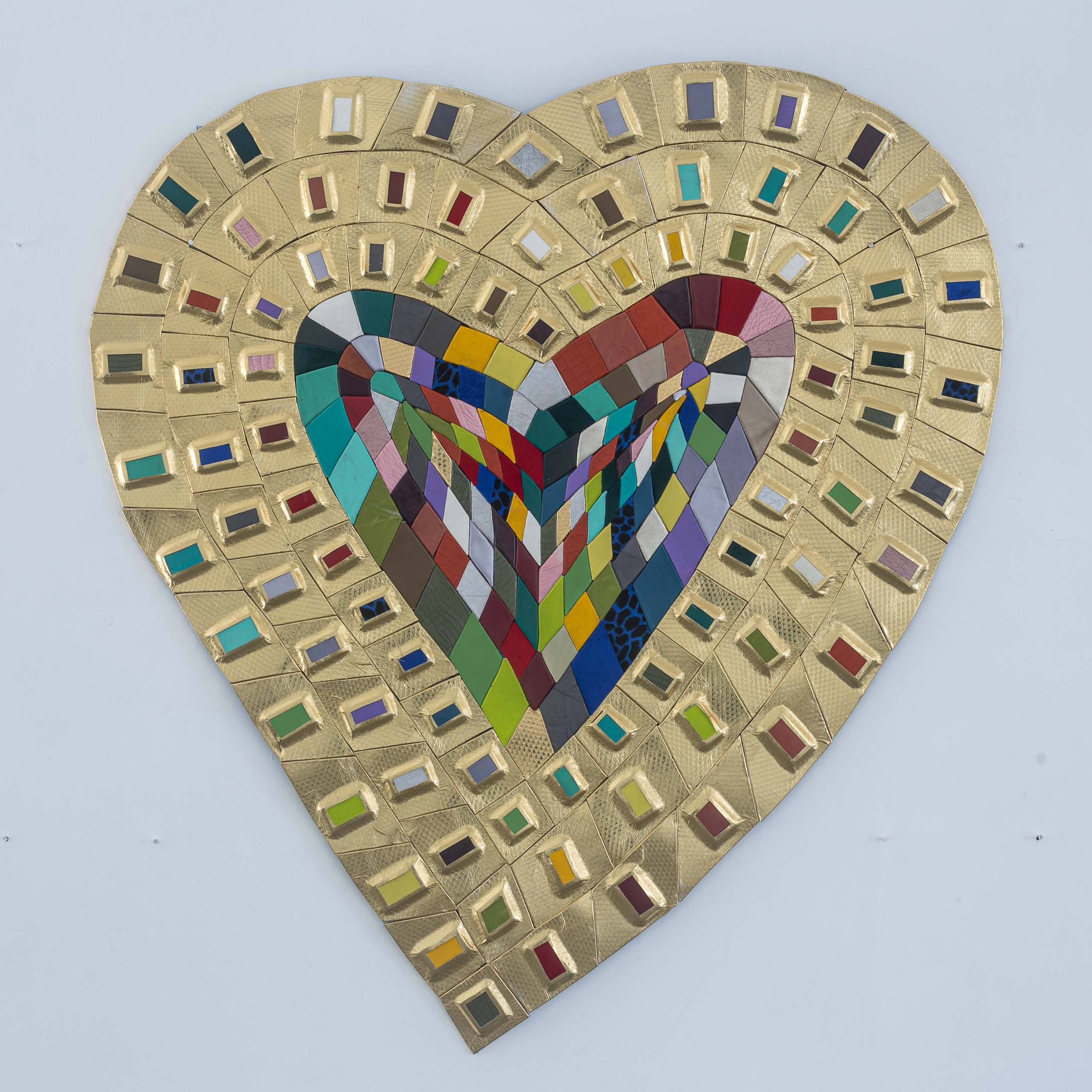
Akoma (Heart)
Leather, Fabric, Ethylene-Vinyl Acetate & Bonded Nylon Thread
65 x 59 inches
2026
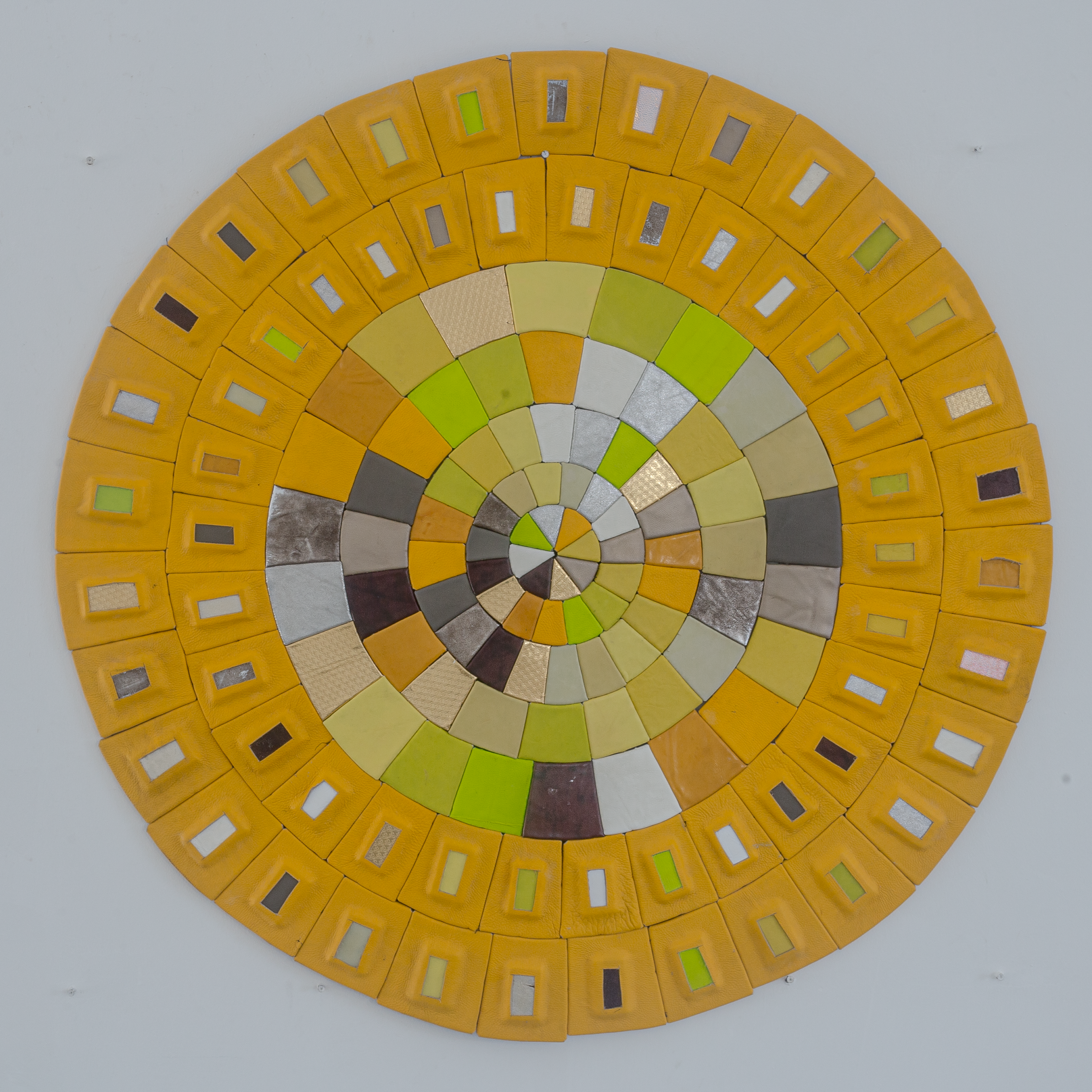
Kesinonu (Treasure)
Leather, Fabric, Ethylene‑Vinyl Acetate & Bonded Nylon Thread
46.5 inches round
2026
Akoko (Fertility Leaf, Tree of Life)
Leather, Fabric, Ethylene‑Vinyl Acetate & Bonded Nylon Thread
3ft round
2026
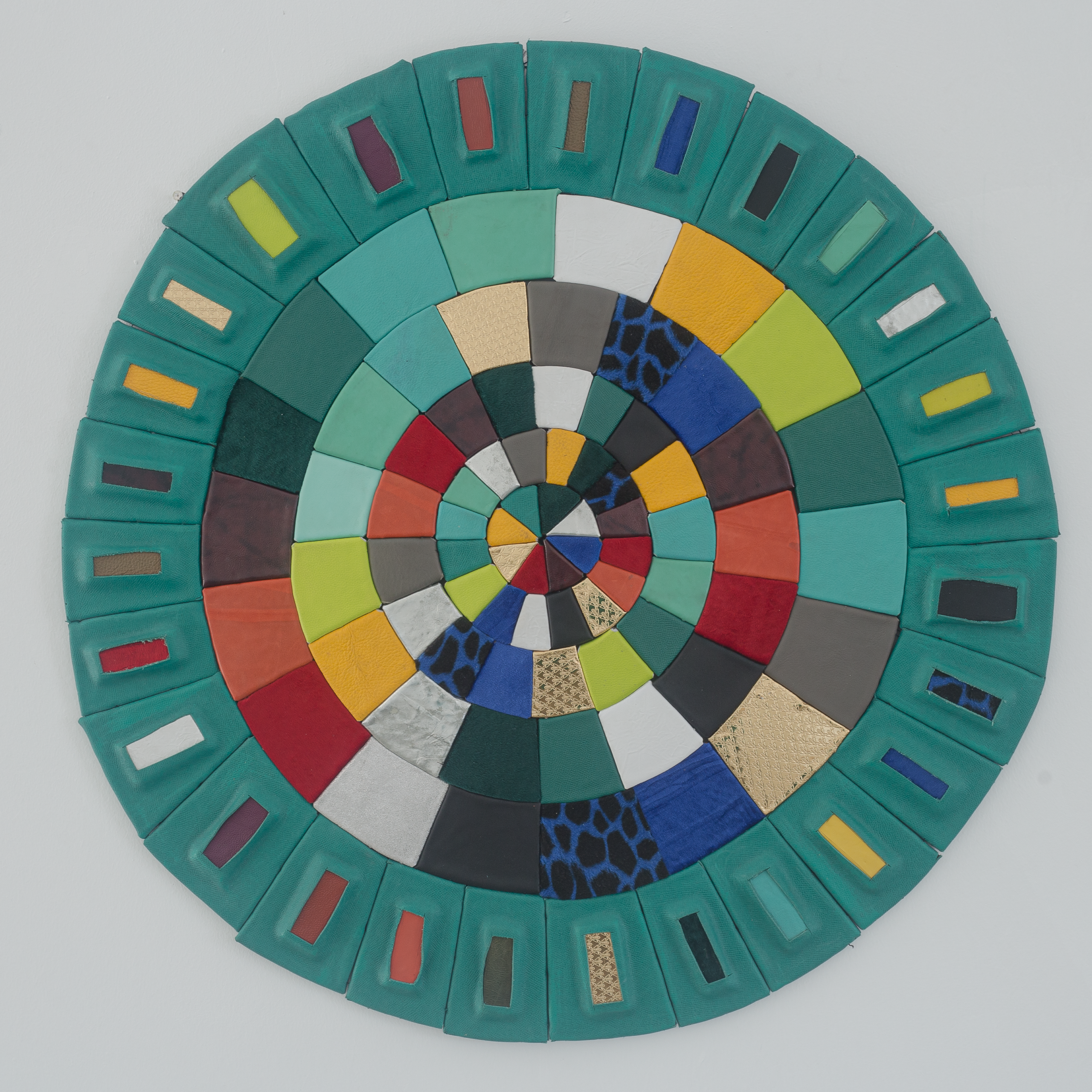
Fragrance of Wholeness
Leather, Fabric, Ethylene‑Vinyl Acetate & Bonded Nylon Thread
45.5 inches round
2026
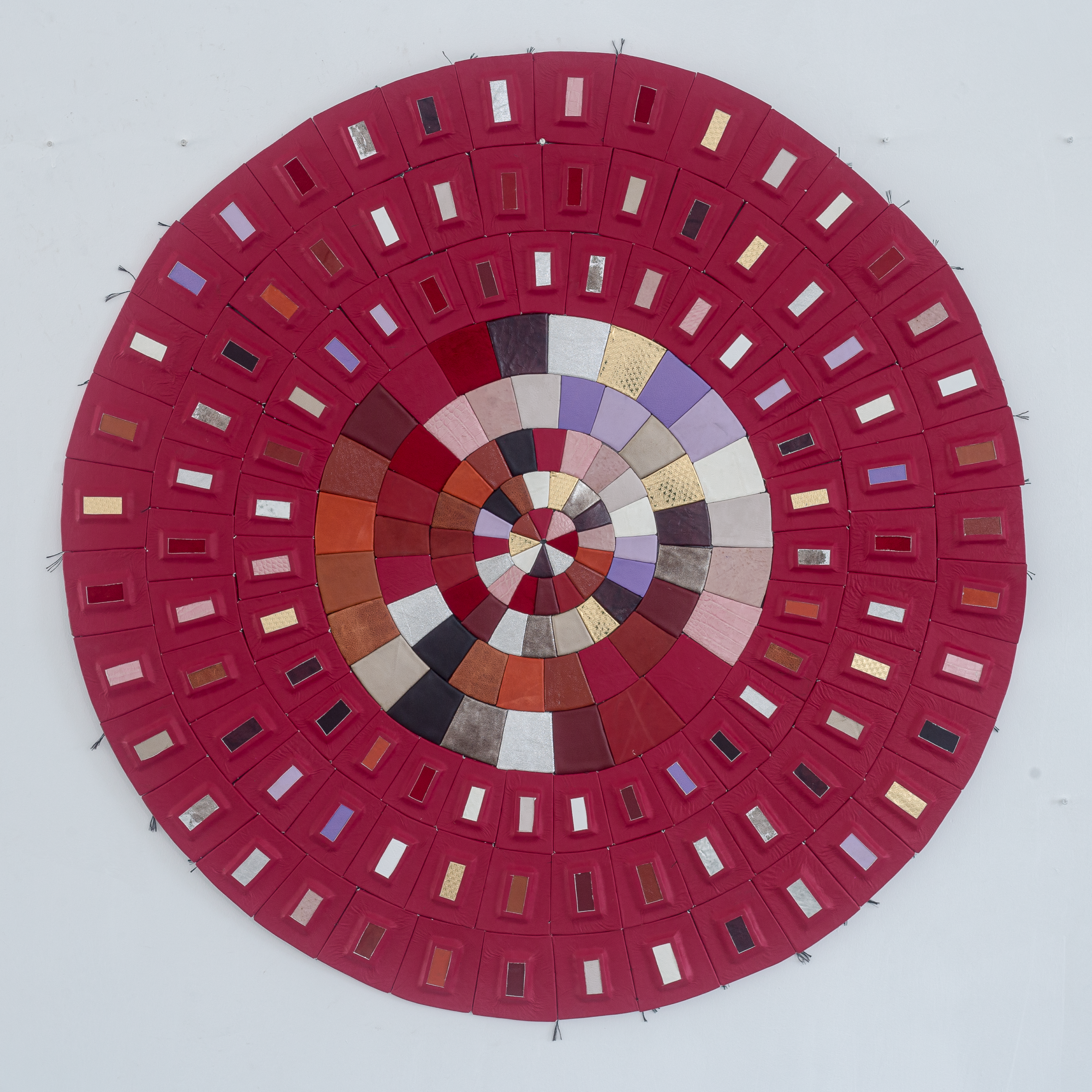
Odo Foforo (New Love)
Leather, Fabric, Ethylene‑Vinyl Acetate & Bonded Nylon Thread
57.5 inches round
2026
Artist CV
Donec quam felis, ultricies nec, pellentesque eu, pretium quis, sem. Nulla consequat massa quis enim. Donec pede justo, fringilla vel, aliquet nec, vulputate eget, arcu. In enim justo, rhoncus ut, imperdiet a, venenatis vitae, justo. Nullam dictum felis eu pede mollis pretium. Integer tincidunt. Lorem ipsum dolor sit amet, consectetuer adipiscing elit. Aenean commodo ligula eget dolor. Aenean massa. Cum sociis Theme natoque penatibus et magnis dis parturient montes mus.